If you have typed “HDFC Bank” into Google, you are probably looking for one of a few things. Maybe you want to log in to net banking. Maybe you are checking the share price before you invest. Or maybe you just want the customer care number because something is not working.
I am Shipon, and I track the Indian stock market and banking sector for a living. In this article, I am covering HDFC Bank from a practical angle — how the bank works, what net banking and login look like, how the share is doing, what the credit cards offer, and how to reach customer care when you need help. I have not personally used every HDFC Bank product, so wherever I don’t have first-hand experience, I am writing as an informed analyst, not as someone pretending to have tested it.
Let’s get into it.
What Is HDFC Bank
HDFC Bank is one of India’s largest private sector banks, headquartered in Mumbai. It offers the full range of banking services — savings and current accounts, fixed deposits, loans, credit cards, demat accounts, and investment products. It also has a presence outside India in a few locations for NRI and international banking needs.
The bank is listed on the NSE and BSE under the symbol HDFCBANK, and it is one of the most widely tracked stocks in the Indian banking and financial sector. After merging with its parent housing finance company HDFC Ltd a couple of years back, HDFC Bank became even bigger, with a much larger loan book and balance sheet than before.
HDFC Bank Login and Net Banking
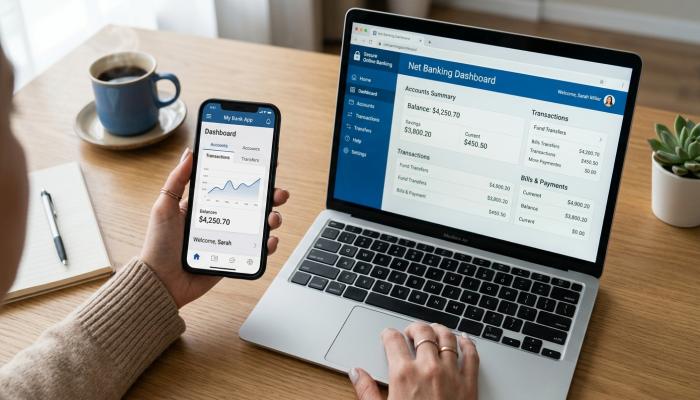
HDFC Bank net banking is the online portal where you can check your account balance, transfer money, pay bills, open fixed deposits, and manage most of your banking without visiting a branch.
To use HDFC Bank net banking, you generally need:
- Your customer ID or user ID (usually available on your chequebook, passbook, or welcome kit)
- A registered mobile number for OTP verification
- Your net banking password, which you set up during registration
If you are logging in for the first time, HDFC Bank’s website has a “New Registration” option where you can register using your customer ID and registered mobile number. Once registered, you can log in directly using your user ID and password.
A few practical points about HDFC Bank login:
- Always type the URL directly or use the official HDFC Bank app instead of clicking links from SMS or email, since fake login pages are a common banking fraud tactic.
- If you forget your password, there is a “Forgot Password” option that resets it using your registered mobile number and date of birth or other identity details.
- After several wrong password attempts, the account usually gets locked for security. In that case, you will need to unlock it through the app, net banking recovery flow, or by calling customer care.
If net banking is not working for you, before assuming something is broken, check these basic things first: whether your internet connection is stable, whether you are using an updated browser, and whether your account has been temporarily locked due to inactivity or wrong login attempts.
HDFC Bank Mobile App
Along with net banking, HDFC Bank also has a mobile app that covers most of the same functions — fund transfers, bill payments, FD and RD bookings, loan EMI tracking, and credit card management. Many customers find the app more convenient than the desktop net banking site because of biometric login (fingerprint or face unlock) instead of typing a password every time.
If you are someone who prefers doing banking on the phone, the app is generally the easier route. If you prefer a bigger screen and more detailed statements, net banking on a laptop or desktop works better for that.
HDFC Bank Share Price: What Investors Should Know
HDFC Bank share price is one of the most searched terms among Indian retail investors, and for good reason — it is a Nifty 50 heavyweight and a core holding in many mutual funds.
I want to be upfront here: I am not going to quote you a specific price in this article, because stock prices change every second the market is open, and any number I give you today could be outdated by the time you read this. Instead, here is how to check it properly and what to look at:
- Check the live price on the NSE or BSE website, or on a trusted broking app like Zerodha, Groww, or your own broker’s platform.
- Don’t rely only on the price — look at the 52-week high and low to understand where the current price sits in its recent range.
- Keep an eye on quarterly results. Bank stocks move a lot around results day, especially on numbers like net interest margin, asset quality (NPAs), and loan growth.
- HDFC Bank’s share price has gone through a fair amount of volatility in the last couple of years, partly linked to the merger with HDFC Ltd and shifting expectations from foreign investors. This is normal for a large bank stock, but it means the stock can swing meaningfully around news and results.
Important: This is not a recommendation to buy or sell HDFC Bank shares. Whether this stock fits your portfolio depends on your own financial goals, risk appetite, and time horizon. Please do your own research or speak with a SEBI-registered financial advisor before making any investment decision.

Also Read: Spice Money: Complete Guide to Login, Services, Charges and Common Problems
HDFC Bank Credit Cards
HDFC Bank has one of the largest credit card portfolios among Indian banks, with cards designed for different types of spenders — cashback-focused cards, travel and airmiles cards, premium lifestyle cards, and basic no-frills cards for first-time users.
Some general things to know about HDFC Bank credit cards:
- Eligibility usually depends on your income, credit score, and existing relationship with the bank. Existing HDFC Bank customers with a good banking relationship sometimes get pre-approved offers.
- Charges such as annual fees, late payment charges, interest rates on unpaid balances, and foreign transaction fees vary a lot by card variant. Since these charges get revised from time to time, always check the latest fee schedule on HDFC Bank’s official website or your card’s terms and conditions before applying.
- Rewards and cashback structures also change periodically, so a card that looked attractive a year ago may have different reward rates today.
If you are applying for a credit card, my honest suggestion is to match the card to your actual spending pattern — someone who travels often benefits more from a travel card, while someone who mostly spends on groceries and utilities may get more value from a cashback card. Don’t pick a card just because of a flashy welcome offer.
HDFC Bank Customer Care Number
If you are facing an issue — a failed transaction, a lost card, a login problem, or general queries — HDFC Bank’s official toll-free customer care numbers are 1800 1600 and 1800 2600, accessible across India.
A few safety points worth repeating:
- Only use the numbers listed on HDFC Bank’s official website. Fake customer care numbers circulated on search engines and social media are a common banking scam in India.
- Never share your CVV, OTP, PIN, or full card number with anyone over the phone, even if the caller claims to be from HDFC Bank. The bank will never ask for these details.
- Many services, like reporting a lost card, are available 24×7. Some services, like certain loan-related queries, may only be available during specific hours. Check HDFC Bank’s official contact page for the exact timing of the service you need.
- If a customer care call does not resolve your issue, you can escalate it through the bank’s grievance redressal process, which is listed on the official website.
Common Problems Customers Face
Based on general patterns reported by banking customers in India, a few common issues that come up with HDFC Bank (or any large bank, really) include:
- Net banking or app login failures — often due to expired passwords, locked accounts, or app update issues.
- Delayed fund transfers — usually linked to bank server load, incorrect beneficiary details, or a temporary hold for security checks.
- Credit card billing disputes — such as being charged for a transaction that failed on the customer’s end or a subscription that wasn’t cancelled properly.
- OTP not received — often a mobile network issue or an outdated registered mobile number.
For most of these, the first step is checking your own account settings (registered mobile number, app version, internet connection). If the problem persists, customer care or a branch visit is the next step.
Who HDFC Bank Suits, and Who Might Look Elsewhere
HDFC Bank works well for customers who want a full range of banking services under one roof — savings account, loans, credit cards, and investment products — along with a wide branch and ATM network across India. It also suits investors who want exposure to a large, well-established private bank in their portfolio.
It may be less suitable for customers looking for the lowest possible fees on every single product, since some regional or smaller banks occasionally offer more competitive charges on specific products. It’s worth comparing charges across a couple of banks for your specific need — like a personal loan or a specific credit card — rather than assuming one bank is cheapest across the board.
Practical Tips Before You Start
- Before opening any account or applying for any product, check the latest charges and terms directly on HDFC Bank’s official website, since these change over time.
- Keep your registered mobile number updated at all times — most OTP-based security depends on it.
- Set up net banking and the mobile app together for backup access in case one isn’t working.
- If you’re evaluating the stock, track quarterly results and management commentary rather than just the daily price movement.
FAQ
1. How do I log in to HDFC Bank net banking for the first time? Go to the official HDFC Bank net banking page and use the “New Registration” option with your customer ID and registered mobile number to set up your login.
2. What is the HDFC Bank customer care number? The toll-free numbers are 1800 1600 and 1800 2600, accessible across India. Always verify this on HDFC Bank’s official website, since fake numbers do circulate online.
3. Is HDFC Bank share a good investment? That depends entirely on your own financial goals and risk tolerance. I can’t tell you to buy or sell it — check the latest financials, results, and price trends, and consider speaking with a financial advisor.
4. What should I do if my HDFC Bank net banking login is locked? Use the “Forgot Password” or account unlock option on the net banking page or app, or call customer care if the online option doesn’t work.
5. Are HDFC Bank credit card charges the same for all cards? No, charges like annual fees and interest rates vary by card variant and change periodically. Always check the latest fee schedule for your specific card before applying.
Conclusion
HDFC Bank is a large, well-established name in Indian banking, with a wide product range covering everyday banking, credit cards, and investments. Net banking and the mobile app cover most day-to-day needs, and the official customer care numbers (1800 1600 / 1800 2600) are there for anything you can’t resolve yourself. If you’re looking at the stock, treat it like any other investment decision — check current numbers, understand the risks, and decide based on your own goals rather than headlines.
Disclaimer
This article is for educational and informational purposes only and does not constitute financial advice. Charges, features, and terms mentioned here may change over time — please verify the latest details on HDFC Bank’s official website before making any decision. This is not a recommendation to buy, sell, or hold any stock, and readers should consult a SEBI-registered financial advisor for personalized investment advice.