If you have heard about Spice Money and want to know what it actually is, how the login works, and whether it is worth using, you are in the right place. In this post I will explain Spice Money in simple language — what it does, how agents and customers use it, its charges, its limitations, and the problems people usually face with it.
I am writing this as an analyst, not as someone who has personally run a Spice Money outlet. So wherever I talk about fees, processes, or features, I am relying on publicly available information from Spice Money’s own website and other reliable sources. Charges and features on fintech platforms change often, so please check the official app or website for the latest numbers before you rely on anything here.
What Is Spice Money?
Spice Money is one of India’s largest rural fintech platforms. It is run by Spice Money Limited (earlier under Spice Digital Ltd), and it works as a “banking correspondent” or assisted-banking network.
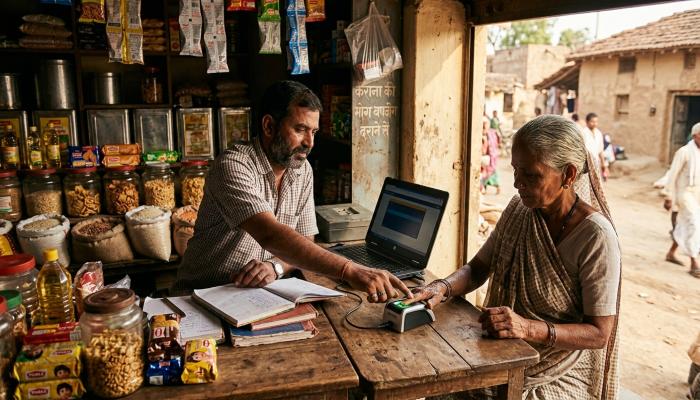
In simple words, Spice Money turns a local shop — a kirana store, a mobile recharge shop, a cyber café — into a mini banking point. The shop owner becomes a “Spice Money Adhikari” (agent), and through this agent, ordinary people in that area can do basic banking work without going to a bank branch.
This is especially useful in rural and semi-urban India, where bank branches are far away or crowded. Spice Money’s own materials describe it as focused on financial inclusion, with a strong presence across small towns and villages in India.
It is important to understand one thing clearly: Spice Money is not a stock trading platform or a stockbroker. It does not offer share trading, mutual funds, or demat accounts. It is a banking and payments service. If you came here looking for a trading app, Spice Money is not that — it deals with money transfer, cash withdrawal, bill payments, and similar services.
How Spice Money Works
Spice Money mainly works through two types of users:
- Agents (Adhikaris) — People who register as Spice Money agents and offer services to customers from their shop, earning commission on each transaction.
- Customers — People who visit these agents to withdraw cash, send money, pay bills, or use other services, usually using their Aadhaar number and fingerprint.
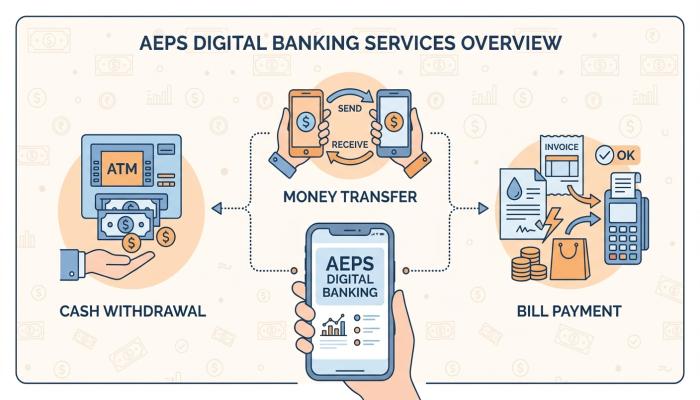
The core technology behind many of these services is AePS (Aadhaar Enabled Payment System), an RBI-backed system that lets people access their bank account using Aadhaar authentication and a fingerprint scanner, instead of a debit card or passbook.
Spice Money Login Process
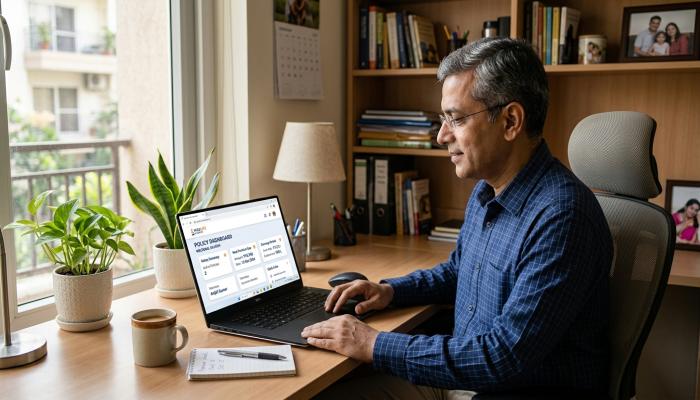
To use Spice Money as an agent, you need to log in to the B2B portal. Here is the general process, based on how the platform is typically described:
- Go to the official Spice Money B2B portal (the agent portal, often referred to as b2b spice money) or open the Spice Money Adhikari app on your phone.
- Click on the “Agent Login” or “Login” option.
- Enter your Agent ID (or registered mobile number) and password.
- If two-factor authentication is switched on, you may need to enter an OTP sent to your registered mobile number.
- Once logged in, you land on your agent dashboard, where you can see your transaction history, commissions, and access various services.
If you are searching for “spice money agent login” or “spice money login”, always type the web address directly into your browser or use the official app from the Play Store, rather than clicking links from random messages or unknown websites. Fintech agent accounts are a common target for phishing, so this basic habit matters.
How to Become a Spice Money Agent
Becoming an agent generally involves:
- Filling out an online registration form on the Spice Money website or app.
- Submitting KYC documents such as Aadhaar and PAN.
- Verification by the Spice Money team.
- Receiving your Agent ID and initial login details once your registration is approved.
Since exact eligibility criteria, documents required, and approval timelines can change, it is best to check the current requirements directly on the official Spice Money website or app before starting your registration.
Main Services Offered
Depending on the region and your agent registration status, Spice Money typically offers services in these broad categories:
- AePS services – cash withdrawal, balance enquiry, and mini statement using Aadhaar and fingerprint.
- Domestic Money Transfer (DMT) – sending money from a customer to any bank account in India.
- Bill payments and recharges – electricity bills, mobile recharge, DTH recharge, and similar utility payments.
- Travel and ticketing – some agents can book train tickets or bus tickets through the platform.
- Insurance and loan-related services – certain insurance products, and in some cases assistance with loan-related services, subject to tie-ups Spice Money has at the time.
- PAN card services – application or correction services for PAN cards.
Not every service is available to every agent at all times, and the exact list can change as Spice Money adds or removes partnerships. Always confirm current service availability from your dashboard.
Also Read: What Is a Digital Wallet? A Simple Guide for Indian Users
Benefits of Using Spice Money
For agents:
- Low starting investment compared to opening a full financial services shop.
- An existing shop (grocery, mobile recharge, stationery, etc.) can add Spice Money services as a side income.
- Commission is earned on transactions, which can add up in high-footfall areas.
- No need for the agent to have deep technical or banking knowledge — the app guides most steps.
For customers:
- Banking access without visiting a distant bank branch.
- Useful for people who do not have a debit card or are not comfortable using ATMs.
- Quick cash withdrawal and money transfer at a nearby shop.
- Convenient for bill payments and recharges in one place.
Limitations and Disadvantages
No platform is perfect, and it is fair to point out where Spice Money has limitations:
- Dependent on network and biometric devices. AePS transactions need a stable internet connection and a working fingerprint scanner. Poor network in rural areas can cause failed transactions.
- Transaction limits. Like most AePS-based services, there are daily and monthly limits on how much money can be withdrawn or transferred. These limits are set by RBI/NPCI rules and can change, so agents and customers should check current limits before large transactions.
- Biometric failures. Aadhaar-based fingerprint matching does not always work — this can happen due to worn fingerprints (common in manual laborers), dry skin, or scanner quality issues.
- Commission structure changes. Since Spice Money is a business, commission rates for agents can be revised. Agents should not assume the commission they see today will remain fixed indefinitely.
- Dependency on a third party for banking access. Since transactions go through an agent, customers depend on that agent being honest and available. It is important to always check the mini-statement or receipt after any transaction.
Common Problems Users Face
Some issues that agents and customers commonly report with AePS-style platforms in general, including Spice Money, are:
- Login failure or “invalid credentials” errors.
- Transaction shown as failed on screen, but amount deducted from the customer’s bank account (this can happen with any AePS-based system due to network timeouts).
- Fingerprint not matching on the first attempt.
- Delay in commission credit to the agent’s wallet.
- Difficulty reaching customer support during peak hours.
Practical Steps If a Transaction Fails But Money Is Deducted
This kind of issue is not unique to Spice Money — it can happen with any AePS or banking correspondent service, because the transaction may fail on the merchant’s screen while the request was actually processed by the bank.
If this happens:
- Do not panic. In most cases, the money is automatically reversed within a few hours to a few working days.
- Ask the agent for the transaction reference number or receipt.
- Check your bank statement or SMS alerts to confirm the deduction.
- If the amount is not reversed within the usual time window, raise a complaint with Spice Money customer care, and also inform your own bank.
- Keep any screenshots or receipts as proof while your complaint is being processed.
Practical Steps for Login Issues
- Double-check that you are using the correct, official website or app — not a look-alike site.
- Use the “Forgot Password” option if you cannot remember your login details.
- Make sure your registered mobile number is active, since OTPs are usually sent there.
- If the problem continues, contact Spice Money support instead of trying multiple random resets, which can sometimes lock the account temporarily.
Charges and Fees
Spice Money, like other AePS and DMT-based platforms, charges fees for certain services such as mini-statement checks, money transfers, or specific transactions. These charges can be a fixed amount or a percentage, and they can be different depending on the transaction type and current company policy.
Since these charges are revised from time to time, I am not listing exact numbers here. Please check the latest charges directly inside the Spice Money app or on the official Spice Money website before doing any transaction, so that you and your customers know exactly what will be deducted.
Is Spice Money Safe?
Spice Money works on the AePS framework, which is regulated by NPCI and RBI guidelines. This means the underlying payment rails are part of India’s regulated banking infrastructure, not a private, unregulated system.
That said, “safe” does not mean “risk-free.” A few safety points worth keeping in mind:
- Never share your login password or OTP with anyone, including someone claiming to be from Spice Money support.
- As a customer, always verify the transaction receipt or SMS confirmation before leaving the agent’s shop.
- As an agent, keep your device and app updated, and do not let unauthorized people use your login.
- Be cautious of fake “Spice Money agent” recruiters who ask for large upfront payments outside the official registration process — verify any agent opportunity through the official website only.
Who May Find Spice Money Useful
- Small shop owners in semi-urban or rural areas looking to add a side income stream.
- People living in areas with limited bank branches who need basic banking access.
- Customers without a debit card who still want to withdraw cash from their bank account.
- Anyone needing basic services like bill payment or recharge from a trusted local point.
Who May Not Find It Suitable
- Those looking for stock trading, mutual fund investment, or a demat account — Spice Money does not offer these.
- People who need very high-value transactions, since AePS-based services usually have transaction limits.
- Areas with very poor or unreliable internet connectivity, where transaction failures may be frequent.
Things to Check Before Using Spice Money
- Confirm you are on the official Spice Money website or app, not a fraudulent copy.
- Check the current transaction limits for AePS and money transfer.
- Review the latest charges for the specific service you plan to use.
- If registering as an agent, verify the registration process only through official channels.
- Keep the Spice Money customer care number handy in case you face any transaction dispute.
Frequently Asked Questions
1. What is Spice Money used for? Spice Money is used to offer basic banking and payment services — such as cash withdrawal, money transfer, bill payment, and recharge — through local agents, mainly in rural and semi-urban India.
2. Is Spice Money a trading or investment platform? No. Spice Money is a banking correspondent and payments platform. It does not offer stock trading, mutual funds, or demat account services.
3. How do I do a Spice Money agent login? You log in through the official B2B agent portal or the Spice Money Adhikari app using your Agent ID and password, and OTP if two-factor authentication is enabled. Always use the official website or app to avoid phishing pages.
4. What should I do if my Spice Money transaction fails but the money is deducted? Keep the transaction receipt, check your bank SMS or statement, wait for the usual reversal window, and if the amount is not refunded, contact Spice Money customer care and your bank with proof of the transaction.
5. Is Spice Money safe to use? It runs on the RBI/NPCI-regulated AePS framework, which is part of India’s formal banking system. However, general safety practices — like not sharing your OTP or password, and verifying receipts — still apply, as with any financial service.
Conclusion
Spice Money is a rural fintech and assisted-banking platform that helps people access basic banking services through local agents, using Aadhaar-based authentication. It is genuinely useful for financial inclusion in areas where bank branches are scarce, and it offers a low-investment income opportunity for small shop owners. At the same time, it has real limitations — transaction limits, biometric issues, and dependence on network connectivity — that both agents and customers should be aware of. Before using any service, especially around charges and limits, it is always best to check the latest information directly from Spice Money’s official app or website.
Disclaimer
This article is for educational and informational purposes only and is not financial advice. Charges, features, limits, and processes mentioned here may change over time, and readers should verify current details directly from Spice Money’s official website or app before making any financial decision or transaction.