
Introduction
Personal finance sounds like a big, complicated word. But at its core, it just means how you handle your own money. How you earn, spend, save, invest, and plan for the future.
If you have ever felt confused about where your salary goes every month, or wondered how to start saving properly, this article is for you. I am Shipon, and I work as a market analyst. In this post, I want to break down personal finance in simple terms, without jargon, so that any Indian reader can actually use this information in daily life.
We will cover what personal finance really means, why personal finance management matters, how to build a personal finance plan step by step, common mistakes people make, and some honest thoughts on tools like ChatGPT for personal finance advice. I will also touch on where to find a personal finance handbook PDF if you want to study this topic in more depth.
Table of Contents
What Is Personal Finance?
Personal finance is the management of your money and financial decisions. This includes:
- Earning income (salary, business, freelance work)
- Budgeting and spending
- Saving money regularly
- Investing for future goals
- Managing debt and loans
- Planning for taxes
- Preparing for retirement
- Having insurance for protection
In short, personal finance covers everything you do with the money that comes into your hands. It is not just about investing in the stock market or mutual funds. Investing is only one part of the bigger picture.
Many people in India think personal finance is only for the rich, or only for people who are good with numbers. That is not true. Anyone earning any amount of money can benefit from understanding personal finance basics.
Why Personal Finance Management Matters
Good personal finance management gives you control over your money instead of your money controlling you. Here is why it matters:
1. It Reduces Financial Stress
When you know exactly where your money is going, you worry less. Uncertainty about money is one of the biggest sources of stress for working Indians today.
2. It Helps You Reach Goals
Whether it is buying a house, funding your child’s education, planning a wedding, or building a retirement corpus, none of these goals happen by accident. They need planning.
3. It Protects You During Emergencies
Medical emergencies, job loss, or sudden expenses can hit anyone. Without a financial cushion, these situations can push people into debt.
4. It Helps You Avoid Bad Debt
Understanding personal finance helps you tell the difference between good debt (like a home loan that builds an asset) and bad debt (like high-interest credit card debt used for lifestyle spending).
How to Start Personal Finance Planning: A Step-by-Step Approach
Let’s go through a practical framework for personal finance planning. This is not the only way to do it, but it is a commonly recommended starting point.
Step 1: Track Your Income and Expenses
Before you can plan anything, you need to know your numbers. For at least one month, write down every rupee you earn and spend. You can use a simple notebook, an Excel sheet, or a budgeting app.
Most people are surprised when they see where their money actually goes. Small daily expenses like food delivery, subscriptions, or cab rides often add up to a large amount by month end.
Step 2: Create a Budget
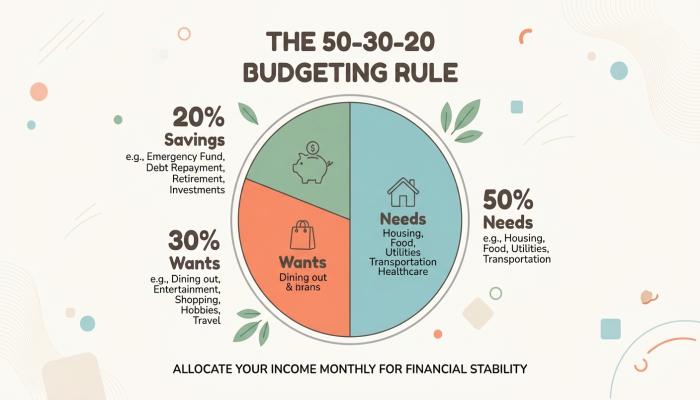
Once you know your income and expenses, divide your money into categories. A commonly used rule is the 50-30-20 approach:
- 50% for needs (rent, groceries, bills, EMIs)
- 30% for wants (entertainment, dining out, shopping)
- 20% for savings and investments
This is just a general guideline. Your actual split may look different depending on your city, income level, and family responsibilities. There is no one-size-fits-all number here.
Step 3: Build an Emergency Fund
Before investing anywhere, most financial planners suggest building an emergency fund first. This is usually recommended to be around three to six months of your essential expenses, kept in a place that is easily accessible, such as a savings account or a liquid fund.
An emergency fund is not for investment growth. Its only job is safety and quick access when you need it.
Step 4: Manage and Reduce Debt
If you have existing loans or credit card debt, especially high-interest debt, work on paying it down. Credit card debt in India often carries very high interest rates, and letting it sit unpaid can seriously hurt your finances over time.
A simple approach many people follow is to pay off the highest interest debt first while making minimum payments on others.
Step 5: Set Clear Financial Goals
Personal finance planning works best when it is tied to actual goals. Instead of just saying “I want to save money,” try to be specific:
- How much do you need?
- By when do you need it?
- Is this a short-term goal (under 3 years), medium-term (3 to 7 years), or long-term (7 plus years)?
Your goal timeline affects what kind of saving or investment option may be suitable, since risk and time horizon are closely connected.
Step 6: Start Investing Based on Your Goals and Risk Comfort
Once your emergency fund is in place and high-interest debt is under control, you can look into investment options. Common options available to Indian investors include fixed deposits, Public Provident Fund (PPF), mutual funds, the National Pension System (NPS), and direct stock market investing, among others.
Each option carries different levels of risk, liquidity, and potential returns. It is important to understand that market-linked investments like mutual funds and stocks can go up or down in value, and past performance does not guarantee future results.
Step 7: Get Adequate Insurance
Insurance often gets ignored in personal finance discussions, but it is a core part of financial planning. Health insurance and term life insurance (if you have dependents) act as a safety net so that a medical emergency or unfortunate event does not wipe out your savings.
Step 8: Review and Adjust Regularly
Your income, expenses, and goals will change over time. It helps to review your budget and financial plan every few months, rather than setting it once and forgetting about it.
Also Read: Stock Market Basics: A Simple Guide for Indian Investors
Common Personal Finance Mistakes Indian Readers Make
- Not tracking expenses at all, so money seems to “disappear” every month
- Delaying the emergency fund and jumping straight into investing
- Following tips blindly from social media without understanding the underlying risk
- Mixing insurance and investment, for example buying investment-linked insurance policies without understanding the costs involved
- Ignoring inflation while planning long-term goals
- Taking on EMIs for lifestyle purchases without checking overall debt burden
None of these mistakes are unusual. Most people make at least one of them at some point. The key is recognising the pattern and correcting it going forward.
Using ChatGPT for Personal Finance Advice: What to Know
A lot of readers now ask AI tools like ChatGPT for personal finance advice. This can be genuinely useful for certain things, such as:
- Understanding financial concepts in simple language
- Getting a general framework for budgeting
- Comparing pros and cons of financial products in general terms
- Getting help with calculations
However, there are important limitations to keep in mind:
- AI tools do not know your complete financial picture, your risk appetite, your family situation, or your specific goals unless you explain everything clearly, and even then, understanding may be incomplete.
- AI-generated advice should not replace guidance from a qualified, registered financial advisor, especially for big decisions like insurance, taxation, or large investments.
- Information about specific charges, tax rules, or product features can change over time. Always check the latest update information from official sources before acting on anything.
Think of ChatGPT or similar tools as a helpful starting point for learning, not a replacement for professional financial advice or your own research.
Where to Find a Personal Finance Handbook PDF
Many readers search for a personal finance handbook PDF to study the topic in a structured way. There are educational resources available from sources such as SEBI’s investor education initiatives, RBI’s financial literacy materials, and various registered financial institutions that publish free guides.
When choosing a personal finance handbook PDF, check that:
- The source is credible (regulatory bodies, established financial institutions, or well-known authors)
- The content is reasonably updated, since tax rules and financial products change over time
- It does not promise guaranteed returns or push a specific product aggressively
Who Should Focus More on Personal Finance Planning
Personal finance planning is useful for almost everyone, but it becomes especially important for:
- Young professionals starting their first job
- People with growing family responsibilities
- Freelancers and business owners with irregular income
- Anyone planning for a major life goal like marriage, home purchase, or retirement
Who May Need Extra Professional Guidance
Some situations are complex enough that self-learning alone may not be enough. This includes:
- People with multiple income sources or business income
- Those planning complex tax strategies
- People handling inheritance or estate planning
- Anyone unsure about their overall risk exposure across investments
In these cases, consulting a registered financial advisor or a qualified chartered accountant is generally a sensible step.
Frequently Asked Questions
1. What is the difference between personal finance and investing?
Investing is just one part of personal finance. Personal finance covers the entire picture, including budgeting, saving, insurance, debt management, and investing.
2. How much should I save every month?
There is no fixed number for everyone. A commonly discussed guideline is saving around 20% of your income, but this depends on your expenses, goals, and life stage.
3. Is it safe to follow personal finance tips from social media?
General education content can be useful, but always verify information from credible sources, and be cautious of anyone promising guaranteed returns or quick profits.
4. Can ChatGPT replace a financial advisor?
No. ChatGPT and similar AI tools can help you understand concepts, but they cannot replace personalized advice from a qualified financial advisor who understands your complete financial situation.
5. Where can I learn more about personal finance for free?
Look for resources from regulatory bodies like SEBI and RBI, as they publish investor education material, including guides that are sometimes available as free personal finance handbook PDFs.
Conclusion
Personal finance does not have to be complicated. At its core, it is about knowing your income, controlling your spending, saving consistently, protecting yourself with insurance, and investing according to your own goals and comfort with risk. There is no single formula that works for everyone, and building good financial habits takes time. Start small, stay consistent, and review your progress regularly.
Disclaimer
This article is for educational and informational purposes only and should not be considered financial advice. Personal finance decisions, including investments, insurance, and tax planning, depend on individual circumstances. Please consult a qualified, registered financial advisor before making financial decisions. Charges, rules, and product features mentioned may change over time, so always check the latest update information from official sources.