Stock trading means buying and selling shares of companies through a stock market. In India, millions of people use online platforms to trade or invest in shares, but trading is not the same as simply buying a stock and holding it for years.
If you are searching for stock trading for beginners, you first need to understand how the market works, when trading takes place, what accounts and apps are required, and what costs and risks are involved.
In this guide, I will explain stock trading in simple terms. I will also cover stock trading time, trading apps, brokerage companies, common mistakes, and some practical points beginners should check before placing an order.
Table of Contents
What Is Stock Trading?
Stock trading is the process of buying and selling shares of publicly listed companies.
When you buy a share, you own a small part of that company. However, a trader usually focuses more on price movements than long-term ownership.
For example, suppose a share is trading at ₹500.
A trader may buy it at ₹500 and later sell it at ₹520. The difference is ₹20 per share before applicable charges and taxes.
The opposite can also happen. If the price falls to ₹480 and the trader sells, the loss is ₹20 per share before costs.
This is why stock trading involves risk. A profit is never guaranteed.
Stock Trading Meaning in Simple Words
The simplest stock trading meaning is:
Buying and selling shares with the aim of benefiting from changes in their market price.
There are different ways to trade stocks. Your trading style usually depends on how long you keep a position.
Intraday Trading
Intraday traders buy and sell shares during the same trading session.
For example, a trader may enter a position in the morning and close it before the market closes.
Intraday trading can be fast-moving. Small price movements can affect your position quickly.
Swing Trading
Swing trading usually involves holding a stock for several days or weeks.
Traders may study price charts, trends, support and resistance, volume, and other technical indicators before making a decision.
Positional Trading
Positional traders may hold a position for weeks or months.
The decision can involve both technical analysis and broader market or company-related factors.
Long-Term Investing
Long-term investing is different from short-term trading.
An investor may hold shares for several years based on the company’s business, financial performance, valuation, and future prospects.
How Does Stock Trading Work in India?
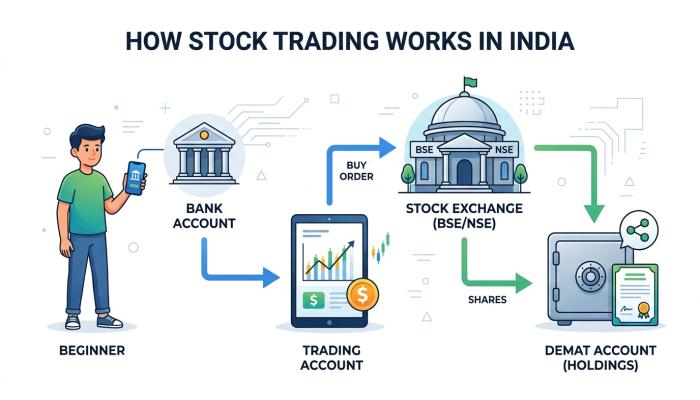
To trade stocks online, you generally need a few basic things.

1. Demat Account
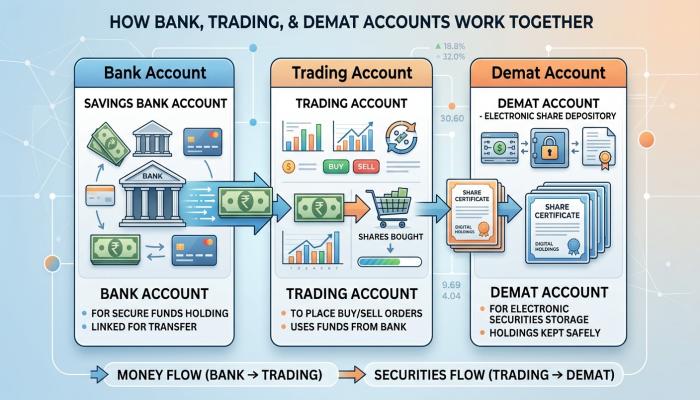
A Demat account holds your shares in electronic form.
Think of it as a digital place where your securities are stored.
2. Trading Account
A trading account is used to place buy and sell orders through a broker.
The broker provides the platform that connects you to the market.
3. Bank Account
A linked bank account is normally used to add or withdraw money for your trading and investment activities.
4. Stock Trading App or Website
Most modern brokers provide mobile apps and web-based trading platforms.
These platforms can allow you to:
- Check market prices
- View charts
- Place orders
- Monitor positions
- Check holdings
- Review transaction information
- Track account-related details
The exact features depend on the broker and can change over time.
Also Read: MCX Share Price: Current Price, History, Targets, Tips and Corporate Actions
Stock Trading Time in India
Understanding stock trading time is important before placing an order.
For the regular equity market in India, trading generally takes place during the weekday market session. The commonly known regular equity market timing is 9:15 AM to 3:30 PM IST.
There are also pre-market and post-market processes, and timings can vary by market segment and exchange rules.
Market holidays can also affect trading days.
So, before relying on a particular timing, check the latest trading schedule from the relevant exchange or your broker.
What Are Stock Trading Apps?
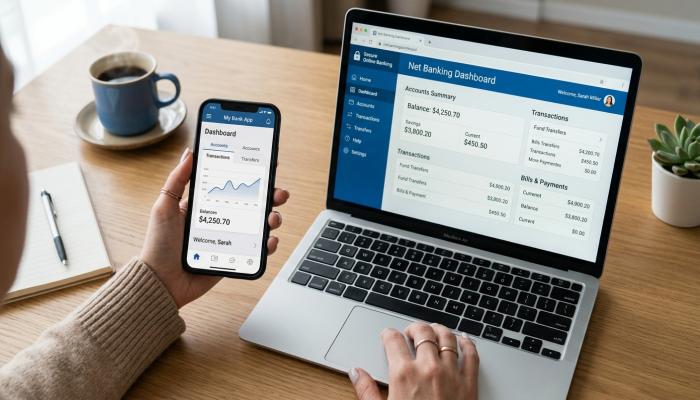
Stock trading apps are mobile applications provided by brokers or financial platforms.
They make it possible to monitor and manage trading activity using a smartphone.
A typical trading app may provide features such as:
- Live or near-live market information
- Stock search
- Price charts
- Buy and sell orders
- Watchlists
- Portfolio information
- Order history
- Market news
- Technical indicators
However, more features do not automatically make an app better for every trader.
A beginner should first look at reliability, transparency, ease of use, security, and costs.
How to Choose a Stock Trading App
There are many platforms available in India. Instead of selecting an app simply because it is popular, I recommend checking a few practical points.
Brokerage and Other Charges
Do not look only at the advertised brokerage.
Depending on the transaction, you may encounter different charges, such as:
- Brokerage
- Securities Transaction Tax (STT)
- Exchange transaction charges
- GST
- Stamp duty
- SEBI-related charges
- Depository participant charges where applicable
The exact amount depends on the transaction and applicable rules.
Always check the broker’s current pricing page before opening an account or trading regularly.
Ease of Use
A complicated app can be frustrating for a beginner.
Look for a platform where you can easily understand:
- Your orders
- Open positions
- Holdings
- Available funds
- Charges
- Profit and loss
Order Types
A useful trading platform should clearly explain available order types.
Common examples include:
Market order: An order intended to execute at the available market price.
Limit order: An order where you specify the price at which you want to buy or sell.
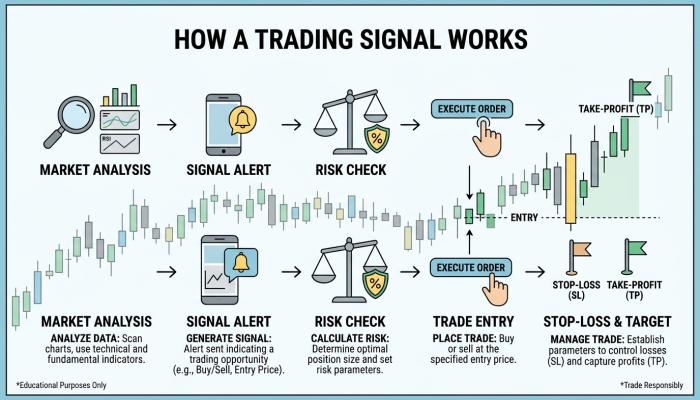
Stop-loss order: An order designed to help manage a position if the market moves against you, subject to the order type and market conditions.
Beginners should understand how an order works before using it with real money.
Stock Trading Companies: What Does the Term Mean?
People searching for stock trading companies may actually mean stock brokers.
A broker provides services that allow investors and traders to access financial markets.
In India, investors can find different types of brokerage businesses and platforms.
When comparing them, I would not focus only on the brand name.
Instead, check:
- Regulatory status
- Current brokerage structure
- Other applicable charges
- Trading platform quality
- Customer support options
- Account opening requirements
- Research and educational tools
- Order and execution features
- Security practices
- Terms and conditions
Brokerage charges and product features can change, so current information should always come from the broker’s official documentation.
Benefits of Online Stock Trading
Online trading has made market access easier for many people.
Convenience
You can monitor your account and place orders through a phone or computer.
Access to Market Information
Trading platforms often provide charts, company information, market data, and other tools.
Faster Order Placement
Online platforms can make order placement much faster than traditional methods.
However, fast execution does not mean a profitable trade.
Better Record Keeping
Most brokers provide digital records of orders, transactions, holdings, and charges.
These records can help you understand your trading activity.
Disadvantages and Risks of Stock Trading
Stock trading also has significant disadvantages.
Losses Can Happen Quickly
Prices can move unexpectedly.
This is particularly important in short-term trading.
Emotional Decisions
Fear and greed can influence trading decisions.
A trader may enter a position because a stock is rising quickly or refuse to exit because they hope the price will recover.
Trading Costs
Frequent trading can increase brokerage and other transaction-related costs.
Even individually small charges can become meaningful when accumulated over many transactions.
Leverage Can Increase Risk
Some trading products allow traders to control larger positions with less upfront capital.
This can increase both potential gains and potential losses.
Beginners should understand the risks completely before using leverage.
Common Mistakes Made by Beginners
When learning stock trading, avoiding basic mistakes is often more useful than searching for a perfect strategy.
Trading Without a Plan
Entering a trade without knowing why you are entering can lead to emotional decisions.
Before taking a position, understand your reason, risk level, and exit conditions.
Using Too Much Money on One Trade
Putting a large portion of your available capital into one trade can create unnecessary risk.
Risk management is an important part of trading.
Following Social Media Tips Blindly
You may see posts claiming that a particular stock will rise or fall.
Do not treat social media predictions as guaranteed information.
Research the underlying information yourself.
Ignoring Charges
A trade that looks profitable before costs may produce a much smaller result after applicable charges and taxes.
Overtrading
More trades do not necessarily mean better results.
Trading simply because the market is open can lead to unnecessary losses and costs.
Basic Technical Analysis for Beginners
Technical analysis involves studying price and market data to understand possible patterns and trends.
Some commonly used concepts include:

Support
Support is a price area where buying interest may appear and where the price has previously found difficulty moving lower.
It is not a guarantee that the price will stop falling.
Resistance
Resistance is a price area where selling pressure may appear.
Again, it is not a guaranteed ceiling.
Trend
A stock can generally move in an upward, downward, or sideways trend over a particular period.
Traders often study different timeframes because a stock can show different trends on different charts.
Volume
Volume shows how much trading activity is taking place.
Some traders use volume alongside price movement to evaluate market activity.
Technical analysis should be treated as a tool, not a prediction machine.
How Beginners Can Start Learning Stock Trading
I suggest starting slowly.
First, understand basic stock market terminology.
Then learn how orders work.
After that, study charts and risk management.
You can also practice analyzing historical price movements without immediately risking real money.
Once you understand the basics, learn how your chosen broker’s platform works.
Before placing any live order, make sure you understand:
- The order type
- The quantity
- The price
- Applicable charges
- Your potential loss
- How you will exit the position
What Should You Check Before Choosing a Broker?
Before opening or actively using a brokerage account, check the latest information about:
- Regulatory registration
- Brokerage charges
- Account-related fees
- Depository charges
- Trading segments offered
- Mobile and web platforms
- Customer support
- Fund transfer methods
- Security features
- Terms and conditions
Do not choose a broker solely because someone on social media recommends it.
Is Stock Trading Suitable for Everyone?
Not necessarily.
Stock trading requires learning, discipline, risk management, and the ability to accept losses.
It may not be suitable for someone who needs the money for essential expenses or cannot tolerate market losses.
A person should also avoid using borrowed money simply because they want to increase their trading position.
For beginners, education and risk awareness should come before attempting to make regular income from trading.
Practical Stock Trading Tips for Beginners
Here are some simple principles I would keep in mind:
- Learn before risking real money.
- Start with a clear trading plan.
- Understand every order before placing it.
- Keep position sizes under control.
- Use risk-management methods appropriate to your strategy.
- Do not follow guaranteed-profit claims.
- Keep track of your trades.
- Review your mistakes regularly.
- Consider all trading costs.
- Never assume that a previous gain will repeat.
The goal should not be to win every trade. No trading method can guarantee that.
The goal is to make decisions based on a sensible process while managing the risk of being wrong.
FAQ About Stock Trading
What is stock trading?
Stock trading is buying and selling shares in the market with the aim of benefiting from price movements. It can involve short-term or longer-term positions.
What is stock trading time in India?
Regular equity-market trading generally takes place from 9:15 AM to 3:30 PM IST on trading days. Pre-market, post-market, exchange holidays, and different market segments can have separate timings.
Which stock trading apps are available in India?
India has many broker-provided trading apps. Before choosing one, compare its current charges, features, security, reliability, and regulatory information rather than choosing based only on popularity.
Can beginners start stock trading?
Yes, beginners can learn stock trading, but they should understand market risks, order types, costs, and risk management before using real money.
Can stock trading guarantee profit?
No. There is no legitimate trading method that can guarantee profits. Market prices can move against a trader, and losses are possible.
Conclusion
Stock trading is not simply about finding a stock and hoping its price increases.
For an Indian beginner, the first step is understanding how the market works, how trading accounts and apps operate, when the market is open, and what charges can apply.
You should also understand the difference between intraday trading, swing trading, positional trading, and long-term investing.
In my view, the most important lesson is simple: focus on learning and risk management before focusing on profits.
A good trading platform can make market access easier, but it cannot remove market risk. Always check the latest information from your broker and the relevant market authorities before making financial decisions.
Disclaimer
This article is for educational and informational purposes only. It is not financial, investment, or trading advice. Stock trading involves the risk of loss. Brokerage charges, regulations, market timings, and platform features may change, so verify the latest information from official sources before acting.