Every year in early February, one event moves the Indian stock market more than almost anything else — the Union Budget. If you trade or invest, you already know this. Prices swing, sectors rotate, and TV channels go into overdrive for a few days.
This article breaks down Budget 2026 in plain language. I will explain what a budget actually is, when Budget 2026 was presented, what changed (and what did not), and how traders and investors can think about it practically. I am writing this as an analyst, not as someone who traded the budget day myself, so I will stick to what has been reported rather than pretending I sat in front of a terminal watching the Nifty move.
Table of Contents
Budget Kya Hai? (What Is a Budget, Simply Explained)
In simple words, a budget is the government’s yearly plan for money. It tells us two things:
- How much money the government expects to earn (through taxes, borrowing, and other sources)
- How much money the government plans to spend (on defence, infrastructure, subsidies, welfare schemes, and so on)
The Union Budget is presented under Article 112 of the Constitution of India. Interestingly, the word “budget” itself does not even appear in the Constitution — it is officially called the “Annual Financial Statement.”
For a normal person, the budget matters because it can change your income tax, the price of things you buy, and how much money flows into different industries. For a trader, it matters because entire sectors can rally or fall depending on what gets announced.
Budget 2026 Date: When Was It Presented?
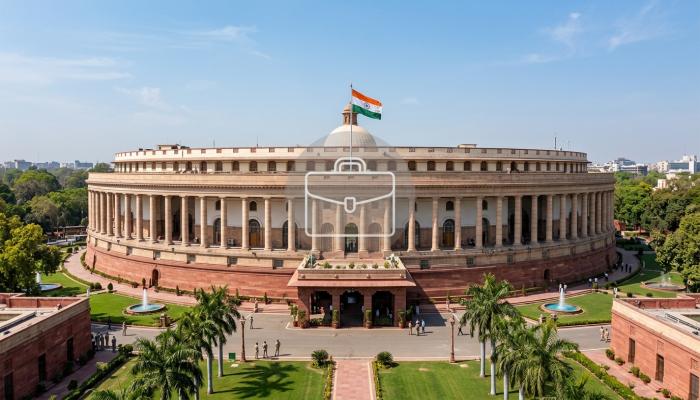
Budget 2026-27 was presented on 1st February 2026 in the Lok Sabha by Finance Minister Nirmala Sitharaman. This was her ninth consecutive budget presentation since 2019, and the third budget of the Modi government’s third term.
The Budget Session of Parliament for 2026-27 ran in two phases — starting 28th January 2026 and continuing till 2nd April 2026, with a recess in between. As always, the Economic Survey was released just before the budget, since the survey’s findings usually shape the budget’s direction.
This pattern — budget on 1st February, followed by a general discussion, then a break, then a second phase for passing finance bills — has been the norm since 2017, when the budget date was moved up from the earlier end-of-February schedule.
India Budget 2026 Highlights
Here are the broad themes that came out of Budget 2026-27, based on what has been reported so far:
Fiscal Numbers
The fiscal deficit for 2026-27 has been projected at 4.3% of GDP, with debt-to-GDP expected to improve to around 55.6%. This continues the government’s multi-year path of gradually reducing the deficit.
Infrastructure Push
A large allocation — reportedly around ₹12.21 lakh crore — has been earmarked for infrastructure development. The stated goal is to reduce logistics costs across the economy and support long-term growth, which is often described in government communication as part of the “Viksit Bharat 2047” vision.
Support for MSMEs
Budget 2026 proposes a ₹10,000 crore SME Growth Fund, along with additional support for the Self-Reliant India Fund. There is also a focus on improving MSME financing and liquidity through mechanisms like TReDS (Trade Receivables Discounting System). This matters for the market because MSME-linked stocks and NBFCs that lend to small businesses often react to such announcements.
A New Income Tax Act
One of the bigger structural changes is the rollout of the new Income Tax Act, 2025, which is set to replace the existing Income Tax Act of 1961 starting 1st April 2026. The stated aim is to simplify the language and structure of tax law, along with redesigned return forms, rather than to change how much tax people pay.
Compliance and Filing Changes
Even though tax rates were left largely untouched, a few compliance-related tweaks were made:
- The deadline for filing a revised income tax return has been extended, giving taxpayers more time to correct mistakes.
- The due date for filing non-audit business returns has reportedly been extended as well.
Since these procedural details can be updated or clarified after the budget speech, please check the latest update on the official India Budget portal or the Income Tax Department’s website before relying on any specific date.
Also Read: Day Trading for Beginners: A Simple Guide for Indian Traders
Budget 2026 Highlights: Income Tax — What Actually Changed?
This is probably the most searched question every year, so let’s be direct about it.
Budget 2026 did not change the income tax slab rates under either the old or the new tax regime. If you were expecting a fresh set of slabs like we saw in some previous budgets, that did not happen this year.
A few points worth noting:
- The new tax regime remains the default option. If you want to use the old regime with its deductions and exemptions, you still need to opt for it specifically.
- Under the existing rebate structure, income up to roughly ₹12 lakh continues to be effectively tax-free for many salaried taxpayers under the new regime, once you factor in the standard deduction and applicable rebate — but this depends on your specific income composition, so it is worth checking with a tax professional or the official calculator.
- Senior citizens under the old regime continue to have a higher basic exemption threshold compared to the new regime.
- For salaried employees, take-home pay, TDS calculations, and payroll structures are expected to remain largely unchanged for FY 2026-27 as a direct result of this budget, since no new slabs or deduction changes were introduced.
In short: if you were hoping for extra cash in hand purely from slab changes this year, that relief did not come from Budget 2026. The bigger tax-related development is structural — the shift to the new Income Tax Act, 2025 — rather than a rate cut.
Budget 2026-27: Why Traders Watch It So Closely
If you are into trading, you already know the market does not wait for the ink to dry on the budget speech. Here is why it matters from a trading angle:
Sector Rotation
Depending on which sectors get more allocation — infrastructure, defence, railways, MSME lending, and so on — related stocks often see increased volumes on budget day and in the days after. This year’s emphasis on infrastructure and MSME support means construction, capital goods, and NBFC-linked stocks have been in focus.
Volatility Around the Announcement
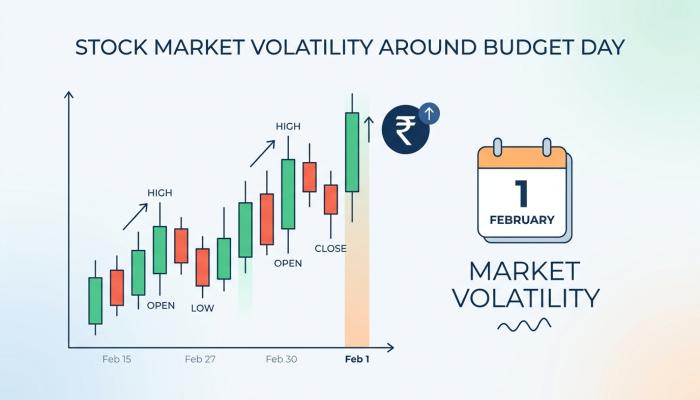
Budget day is typically one of the most volatile trading sessions of the year. The India VIX (volatility index) usually rises in the days leading up to the budget and can spike sharply during the speech itself, as algorithms and traders react to headlines in real time.
Fiscal Deficit and Bond Markets
Numbers like the fiscal deficit and borrowing plan affect bond yields, which in turn affect banking and NBFC stocks, and sometimes the broader market sentiment. A fiscal deficit that comes in as expected or lower is usually taken positively; a higher-than-expected number can create some nervousness.
Common Mistakes Traders Make on Budget Day
- Overtrading on headlines: News flashes during the speech can be misleading in isolation. A single announcement often needs context from the full document before you can judge its real impact.
- Ignoring risk management: Because volatility is high, position sizes that felt fine on a normal day can create outsized losses on budget day if stop-losses are not respected.
- Chasing the first move: Markets sometimes reverse the initial reaction once analysts have gone through the fine print. Reacting only to the first five minutes of price action can lead to poor entries.
Practical Tips for Budget-Day Trading
- Read or watch a summary of the full budget speech rather than relying only on scrolling headlines.
- Keep position sizes smaller than usual if you plan to trade actively on budget day, given the higher volatility.
- Wait for the initial noise to settle before taking a directional bet, especially in sector-specific stocks.
- Cross-check any “breaking” claim about tax or policy changes with the official India Budget portal (indiabudget.gov.in) before acting on it.
Who Should Pay Close Attention to This Budget
- Salaried employees, since payroll and TDS structures are directly tied to what is (or isn’t) announced on tax slabs.
- Small business owners and MSMEs, given the new growth fund and financing-related announcements.
- Traders in infrastructure, capital goods, and NBFC stocks, since these sectors were specifically mentioned in the highlights.
- Long-term investors who track fiscal deficit and debt-to-GDP numbers as part of their broader macro view on the Indian economy.
Who May Not Find Major Changes This Year
If you were specifically looking for a change in your income tax slab or a new personal tax break, Budget 2026 may feel like a quieter year for you personally, since the core tax rates were left unchanged. The bigger changes here are structural and sector-focused rather than direct relief to individual taxpayers.
Things to Check Before You Act on Any Budget 2026 News
- Verify claims against the official Union Budget documents on indiabudget.gov.in, since numbers reported by different outlets can vary slightly before final clarifications.
- Confirm income tax rules with the Income Tax Department’s website or a qualified tax advisor, especially once the new Income Tax Act, 2025 comes into effect from April 2026.
- Remember that budget-related stock moves can reverse quickly; don’t assume a sector rally on budget day will continue in the following weeks without checking the underlying fundamentals.
FAQ
1. What is Budget 2026 in simple terms?
It is the Government of India’s financial plan for the year 1st April 2026 to 31st March 2027, covering expected income, planned spending, and policy priorities.
2. When was Budget 2026 presented?
It was presented on 1st February 2026 by Finance Minister Nirmala Sitharaman.
3. Did Budget 2026 change income tax slabs?
No. The income tax slab rates under both the old and new regimes remained unchanged. The main tax-related change is the rollout of the new Income Tax Act, 2025, effective from April 2026.
4. What is the fiscal deficit target in Budget 2026-27?
The fiscal deficit has been projected at around 4.3% of GDP for 2026-27, with debt-to-GDP expected to improve to about 55.6%.
5. How does the budget affect the stock market?
Sectors that receive higher allocations, like infrastructure and MSME support this year, often see increased trading activity. Volatility also tends to rise around the budget announcement, so risk management becomes more important on that day.
Conclusion
Budget 2026-27 focused more on stability, infrastructure spending, and structural tax simplification than on direct income tax relief for individuals. If you are an investor or trader, the practical takeaways are: no change in your tax slab this year, a continued push on infrastructure and MSME financing, and a fiscal deficit path that stays roughly in line with expectations. As always with budget-related information, especially anything involving specific dates, charges, or tax rules, it’s worth double-checking the latest official update before making any financial decision.
Disclaimer
This article is for educational and informational purposes only and should not be treated as financial or tax advice. Budget-related rules, dates, and figures can be updated or clarified after the initial announcement, so please verify current details from official government sources such as indiabudget.gov.in or a qualified tax professional before making any investment or trading decisions.