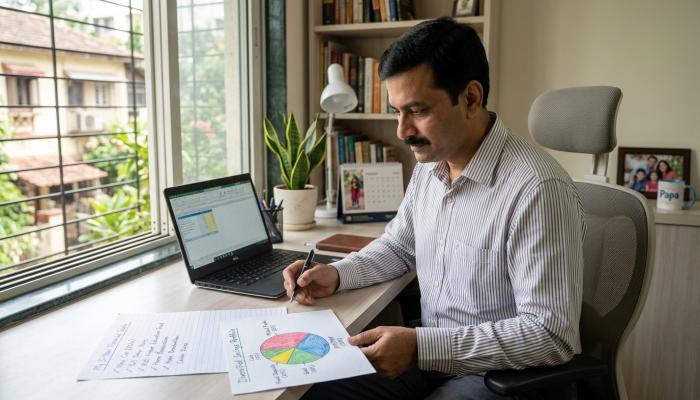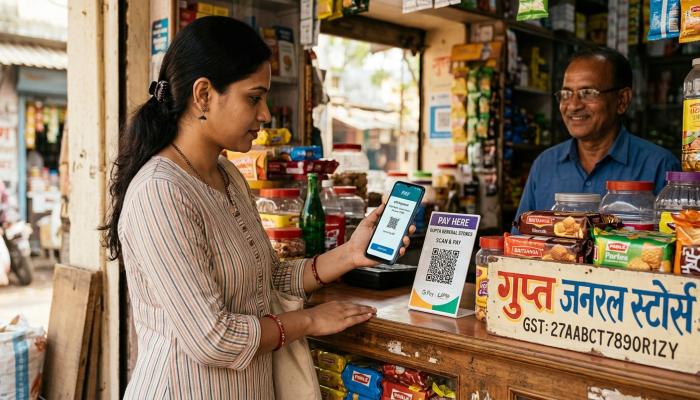
If you have ever wondered whether your money is sitting idle in your savings account, or whether you are choosing the right type of account, you are not alone. Most Indian readers open a savings account once and never think about it again. But small choices — like which bank you pick, whether you go for a 0 balance savings account, or how you use features like Savings Plus — can make a real difference over time.
In this article, I will walk you through how savings accounts work in India, what features matter, common problems people face, and practical things you should check before opening or continuing with one. This is written from a general, informed perspective, not as a personal review of any single bank.
Table of Contents
What Is a Savings Account, and Why Does It Matter
A savings account is a basic bank account that lets you deposit money, withdraw it when needed, and earn a small interest on the balance. It is usually the first financial product most people use, whether for a salary, daily expenses, or building an emergency fund.
The word “savings” here does not mean investment. A savings account is meant for safety and easy access, not for growing your wealth quickly. If you want higher returns, you usually look at fixed deposits, mutual funds, or other investment options. But every trader or investor still needs a savings account as the base of their financial setup — it is where your money sits before it goes into markets, and where it comes back to when you withdraw profits.
How a Savings Account Works
When you deposit money into a savings account, the bank pays you interest on the balance you maintain. This interest is usually calculated daily and credited to your account either monthly or quarterly, depending on the bank’s policy.
You can withdraw money anytime using a debit card, cheque, net banking, or a mobile app. Most banks also let you set up standing instructions, use UPI, and link the account to other services like demat or trading accounts.
Important Features to Look At
When comparing savings accounts, here are the features that actually matter for most people:
1. Minimum Balance Requirement
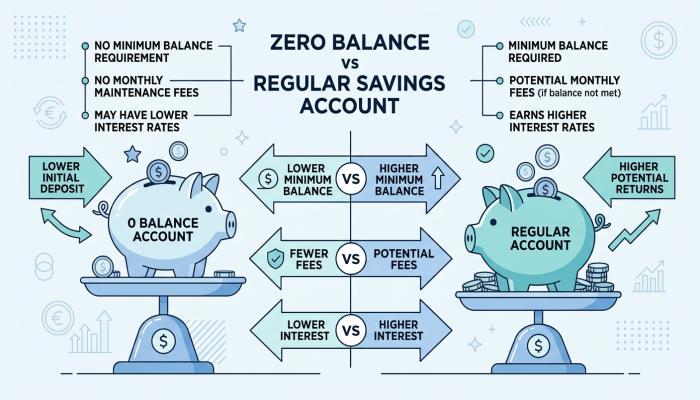
Some accounts require you to maintain a minimum monthly balance, and you get charged a penalty if you fall below it. Others are 0 balance savings account options, meaning you don’t need to maintain any minimum balance at all. If you are someone who doesn’t keep large amounts sitting in your bank account, a 0 balance account can save you from unnecessary charges.
2. Interest Rate
This is the rate at which your idle balance grows. It sounds small, but if you keep a large amount parked for months, it does add up. Interest rates differ across banks and can also depend on how much balance you maintain.
3. Special Variants Like Savings Plus
Many banks now offer a “Savings Plus” type of account. This usually links your savings account to a fixed deposit — any amount above a certain threshold automatically gets swept into an FD, which usually earns higher interest than a regular savings account. When you need money, the FD gets broken automatically to give you cash. This is useful if you keep a higher balance and want it to work a little harder without locking it away completely.
Do check the exact terms of any Savings Plus type product with your bank, since sweep-in and sweep-out rules, minimum sweep amounts, and premature FD breaking rules can vary.
4. Digital Access
Almost every major bank today offers net banking and a mobile app. For active traders, this matters a lot, because you often need to move funds quickly to your trading or demat-linked account.
SBI Savings Account Interest Rate
The State Bank of India revised its savings account interest rate on 15 June 2025. As per this revision, SBI offers a flat interest rate of 2.50% per annum across all savings account balances and account types. There is also no minimum balance requirement for SBI savings accounts, since the bank removed this rule some years back. The maximum balance rule only applies to specific accounts like the Basic Savings Bank Deposit Small Account and Minor accounts.
Since bank interest rates can change without much notice, please check SBI’s official website for the latest update before making any decisions.
HDFC Savings Account Interest Rate
HDFC Bank revised its savings account interest rate effective 24 June 2025. As per this revision, HDFC offers 2.50% per annum on balances below ₹50 lakh, and a higher 3.25% per annum on balances of ₹50 lakh and above. Minimum balance requirements at HDFC vary depending on the account type and branch location, ranging from zero balance options to higher requirements for premium accounts.
Again, since these figures are subject to change, please check the latest update information directly on HDFC Bank’s website before opening or comparing accounts.
Also Read: Stock Analysis: Simple Guide for Indian Investors 2026
Benefits of a Good Savings Account
- Safety: Your money is protected, and bank deposits up to a certain limit are insured under deposit insurance rules.
- Easy access: You can withdraw or transfer money anytime.
- Small but steady interest: Even though the rate is low compared to other investments, it is better than keeping cash idle.
- Useful for traders: A savings account linked to your trading and demat account makes fund transfers smooth.
- Zero balance options: Helpful for students, beginners, or anyone who doesn’t want to worry about penalty charges.
Limitations and Disadvantages
- Low returns: Interest rates on savings accounts are usually lower than inflation, so your money’s real value can shrink slowly over time if you park too much of it there.
- Minimum balance penalties: Many regular accounts still charge a fee if you don’t maintain the required balance.
- Charges for extra services: Things like extra cheque books, duplicate statements, or additional ATM withdrawals beyond the free limit may attract charges.
- Interest is taxable: Interest earned on a savings account is added to your income and taxed as per your slab, though a deduction is available under Section 80TTA (or 80TTB for senior citizens) up to a certain limit.
Common Problems Users Face
- Unexpected minimum balance charges – This usually happens when people don’t track their balance carefully across the month.
- Confusion between account variants – Banks now offer many types of accounts (basic, premium, women’s accounts, senior citizen accounts, Savings Plus, etc.), and it’s easy to end up in the wrong one for your needs.
- Delay in fund transfer to trading accounts – This is usually a bank processing issue and can often be resolved by checking transfer limits and timing (some transfers are faster during banking hours).
- Not receiving SMS/email alerts – Usually fixed by re-registering your mobile number and email ID with the bank.
Practical Solutions
- Track your balance regularly using the bank’s mobile app or SMS banking, especially if you’re on a minimum-balance account.
- If you don’t want to worry about minimum balance, actively look for a 0 balance savings account instead of relying on the regular one.
- For traders, keep your savings account and trading-linked bank account the same wherever possible, to make fund transfers faster.
- Read the terms of any “Plus” or auto-sweep account carefully — understand at what amount the sweep triggers and what happens if you withdraw before the FD matures.
Who May Find a Savings Account Useful
- First-time bank account holders
- Salaried individuals and pensioners
- Students who need a zero-balance option
- Traders and investors who need a base account linked to demat/trading platforms
- Anyone building an emergency fund before moving money into higher-return investments
Who May Not Find It Suitable (For Growing Wealth)
If your only goal is to grow your money over the long term, keeping large sums in a savings account isn’t ideal, because the interest rate is usually lower than what other options like fixed deposits, PPF, or market-linked investments can offer. A savings account works best as a transaction and safety tool, not as your main investment vehicle.
Things to Check Before Opening or Continuing a Savings Account
- Current interest rate and whether it changes based on your balance slab
- Minimum balance requirement, if any, and the penalty for not maintaining it
- Charges for ATM usage beyond free limits, cheque books, and account maintenance
- Whether the bank offers a Savings Plus or auto-sweep facility, and its exact terms
- How easily you can link the account to your trading or demat account
- Customer support quality and branch/ATM network near you
FAQ
Q1. What is a 0 balance savings account?
It is a savings account where you are not required to maintain any minimum balance. Many banks offer this, especially for students, basic accounts, or digital-first account types.
Q2. Is interest earned on a savings account taxable?
Yes. Interest from a savings account is added to your total income and taxed as per your income tax slab. However, a deduction is available under Section 80TTA (up to ₹10,000 for most individuals) or Section 80TTB for senior citizens, subject to the applicable limits.
Q3. What is a Savings Plus account?
It is typically a savings account linked with a fixed deposit. Balance above a set limit automatically moves into an FD to earn higher interest, and moves back to your savings account automatically when you need funds. Exact rules differ by bank.
Q4. Which bank gives a higher interest rate, SBI or HDFC?
As per the latest updates, SBI offers 2.50% p.a. across all balances, while HDFC offers 2.50% p.a. for balances below ₹50 lakh and 3.25% p.a. for balances of ₹50 lakh and above. These rates can change, so always check the latest information on the bank’s official website.
Q5. Is a savings account a good investment option?
Not really, if your goal is growth. It is better used for safety, liquidity, and day-to-day transactions. For growing your money, look at other investment options based on your risk appetite and goals.
Conclusion
A savings account is not exciting, but it is the foundation of your financial life. Whether you choose a 0 balance savings account, a regular one, or a Savings Plus type product, the right choice depends on how much balance you keep and how often you need access to your money. Interest rates from banks like SBI and HDFC are currently similar for most balance ranges, so other factors — like minimum balance rules, charges, and digital convenience — often matter more in your decision. Always verify the latest rates and terms directly with your bank before making a choice.
Disclaimer
This article is for educational and informational purposes only and should not be considered financial advice. Interest rates, charges, and account features mentioned here are based on information available at the time of writing and are subject to change. Please check your bank’s official website or visit a branch for the latest and most accurate details before making any financial decision.